



Notice what happens to your breath the next time you're running late, or waiting on a text you're dreading, or sitting in a meeting that's gone sideways. It gets shorter. Higher up in the chest. Sometimes you catch yourself holding it entirely. Now think about the opposite: a moment when you were completely relaxed. Lying in the grass somewhere, maybe, or right before falling asleep next to someone you trust. That breath is different. Slower. Lower. Quieter.
Most of us have felt both of these states a thousand times over. Almost nobody stops to look at the difference. That's a shame, because the difference is actually telling you something.
Stress changes how we breathe. But breathing also changes how we experience stress — the relationship runs both ways. That doesn't mean three deep breaths will dissolve your anxiety. It won't. What it can do is give the body something to settle into, especially if you let the breath slow down instead of trying to force it.
Here's what's actually happening when you feel threatened or under pressure: your nervous system reacts. Heart rate climbs. Muscles tighten. Breathing speeds up. This is a normal response, and it's useful when there's a real danger.
The trouble is that everyday stress can activate some of the same body systems involved in responding to physical danger. A car swerving into your lane and an email you're dreading are obviously very different, but both can leave you tense, alert, and ready to respond. A hard conversation, a deadline, a thought you can't put down can activate some of the same stress responses in the body, even though there is no immediate physical threat. On alert. Ready. And sometimes that alertness doesn't switch off just because the meeting ended or the email got sent. It just... stays. Hanging around in the shoulders, the jaw, the breath, long after whatever triggered it is gone.
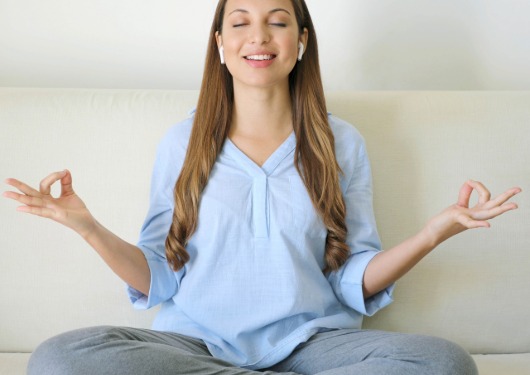
This is one reason I find the breath so interesting. It is connected to the nervous system, but unlike many of the things happening inside us, it is something we can consciously notice and gently influence.
The parasympathetic nervous system is often described as part of the body's "rest and settle" response. It helps support processes associated with recovery and restoration when we are not dealing with an immediate threat. The vagus nerve is one of the important pathways involved in communication between the brain and the body, carrying information in both directions.
Breathing doesn't fix your anxiety; what it does, sometimes, is change the ground your mind is standing on while it deals with whatever it's actually dealing with. That's a smaller claim than "cure," and I think it's the honest one.
There is no single breathing pattern that everyone needs to follow, and deeper is not automatically better. What matters more is allowing the breath to become slower and more comfortable without forcing it. When we slow our breathing, it interacts with the autonomic nervous system in ways that can support a more settled physical state. Research suggests that slow breathing can increase vagally mediated heart-rate variability - a measure used to understand how flexibly the autonomic nervous system is regulating the body.
The research is encouraging, but slow breathing isn't a cure for stress or anxiety. It can influence some of the physical processes that accompany stress and make relaxation easier, although the effects vary from person to person and depend on how the breathing is done.
I've been reading James Nestor's Breath: The New Science of a Lost Art, and it has made me pay even closer attention to something I had previously taken for granted: not just that we breathe, but how we breathe. I've noticed something similar in my own meditation practice. When I deliberately slow my breathing and let it become softer, there is often a physical shift before anything changes in my thoughts. The situation hasn't changed, but my body doesn't feel quite as rushed.
Yogic traditions have worked with the pace and quality of breathing for centuries, particularly through pranayama. Modern research has found that some slower breathing practices can affect cardiovascular and autonomic measures, although different techniques can produce different effects.
That's what I find most useful about slow breathing. It isn't about forcing yourself to relax. It is about changing the pace of something the body is already doing. A slower, easier breath can support the body's natural regulation and give it a little more room to settle.
The problem may still be there. The thoughts may still be there. But sometimes, when the breath slows down, the body doesn't have to rush to meet them.


-converted.webp)