



During a mindfulness coaching discovery call, a prominent actor and director from the Malayalam film industry asked me a question that made me smile.
"Will meditation make me a serious person?"
It wasn't the first time I had heard it.
Over the years, I've been asked different versions of the same question.
"Will I lose my ambition?"
"Will I stop enjoying life?"
"Will I become detached from everything?"
"Will I end up wanting to leave everything behind and go to the Himalayas?"
None of these questions surprise me anymore. In fact, I think they're completely understandable.
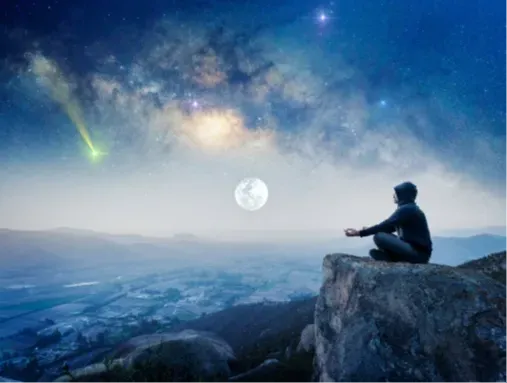
For many people, the word meditation immediately brings to mind the image of a monk sitting silently in a cave, someone who has renounced the world in search of enlightenment. Films and books often reinforce this image. The story usually goes something like this: someone discovers meditation, leaves behind their career, their possessions, and their old life, and disappears into the mountains in search of truth. If that were the inevitable outcome of meditation, I would be concerned too. But that's not what meditation asks of us.
Choosing a Path Is Different from Being Forced Onto One
Yes, there are people who have chosen a life of renunciation. Notice the word chosen. Their path wasn't an automatic consequence of meditation. It was a conscious decision that reflected their own aspirations, values, and calling. Meditation didn't make the choice for them. They made the choice with greater awareness. That distinction is important. Mindfulness doesn't decide how you should live. It simply helps you see your life more clearly. What you do with that clarity remains entirely your own.
Meditation Doesn't Change Your Personality
One of the biggest misconceptions about meditation is that it transforms everyone into the same kind of person. Quiet. Serious. Detached. Almost emotionless. That hasn't been my experience at all. Meditation doesn't erase your personality. It doesn't take away your sense of humour. It doesn't ask you to stop enjoying success, creativity, relationships, or meaningful work. If anything, it allows your personality to express itself with greater authenticity because it becomes less driven by unconscious habits, fears, and reactions. You don't become someone else. You become more fully yourself.
Mindfulness Doesn't Tell You What to See
People sometimes imagine mindfulness as a philosophy that hands you answers. It doesn’t. It gives you a clearer way of looking. You begin noticing your thoughts without immediately believing them. You become aware of emotions without becoming overwhelmed by them. You learn to listen without constantly preparing your next response. You notice your habits, your fears, your desires, and your assumptions with greater honesty. The practice doesn't tell you what conclusions to reach. It simply helps you see more clearly before you choose. And perhaps that is one of the greatest gifts mindfulness offers. Choice.

Living More Consciously
A comedian may continue making people laugh. But perhaps their humour begins coming from a place of deeper observation rather than reaction. An actor may find greater presence in every performance. A business leader may still build a successful company, but with less anxiety and greater clarity. A parent may discover more patience with their children. A homemaker may find that ordinary moments - preparing a meal, tending to the home, sharing time with family - become deeply meaningful rather than repetitive obligations. The external roles may remain exactly the same. What changes is the quality of awareness we bring to them.
You Don't Have to Leave the World
One of my teachers once said that meditation isn't about escaping life. It's about learning how to live it more fully. I have always found that deeply reassuring. Mindfulness doesn't ask you to withdraw from the world. It invites you to participate in it more consciously. You can continue pursuing your career. Growing your business. Creating art. Raising a family. Travelling. Laughing. Dreaming. The difference is that your choices become less automatic and more intentional. You begin responding to life instead of simply reacting to it.
The Freedom to Choose
Perhaps this is what mindfulness is really about. Not becoming a different person. Not becoming a serious person. Not becoming a spiritual person. But becoming a person who is free to choose. Free to pause before reacting. Free to question old habits. Free to live according to your own values instead of unconscious conditioning. That freedom doesn't necessarily change where you live, what work you do, or how others see you. It changes something much quieter. It changes how you experience your own life. And in my experience as a mindfulness coach, that is far more transformative than becoming someone who retreats to the mountains. Because the real invitation of mindfulness isn't to leave the world behind. It's to meet the world - and yourself - with greater awareness, openness, and freedom.
At Nihshreyasa, we don't see mindfulness as a path away from life. We see it as a way of becoming more fully present to it. The practice won't decide who you should become. It simply helps you discover that, perhaps for the first time, the choice has always been yours.


-converted.webp)